
My Mastitis Experience Breastfeeding Twins: What I Wish I Had Known
I knew that breastfeeding twins would be hard. What I didn’t know was what that actually meant in practice.
Before having my boys, I had never breastfed before, so while I expected challenges, I didn’t really have a frame of reference for what was “normal,” what might go wrong, or how quickly things could become overwhelming.
In this post, I’m sharing my experience breastfeeding twins, with a particular focus on my mastitis experience—how it developed, what it felt like, and what I wish I had known earlier that could have saved me a lot of pain.
If you’re reading this while in the middle of breastfeeding, unsure what’s normal or what isn’t, I hope this helps you feel a little less alone—and a little more prepared than I was.
Key Takeaways
I knew that breastfeeding twins would be hard. What I didn’t know was what that actually meant in practice.
- Breastfeeding twins adds complexity but not always in the ways you expect
- Getting support early makes a big difference
- Mastitis can develop quickly, even if things seem to be going fine (or without all of the traditional symptoms)
- The early signs are easy to miss if you’ve never experienced it before
Breastfeeding Essentials for Twins
If you’re planning to breastfeed twins, preparation helps. Here are some items that made a real difference for me:
- A good breastfeeding pillow – especially one designed for twins, to help position them comfortably. (I recommend the Peanut & Piglet pillow, which I discuss over here.)
- Lanolin and/or silverettes – for soothing sore nipples in the early days. I went through a lot of lanolin.
- Hot/cold breast pads – warmth to help with letdown and clogs, cold for soothing swelling or pain (or for mastitis).
- A reliable pump – an absolute must when feeding twins, especially in the beginning.
- Bottles and a sterilizer – even if you plan to mostly breastfeed, flexibility is key.
Breastfeeding Premature Twins
Our Start in the Neonatal Unit
I went into breastfeeding expecting it to be difficult—especially with twins—but I didn’t yet understand the specific challenges that would come with it.
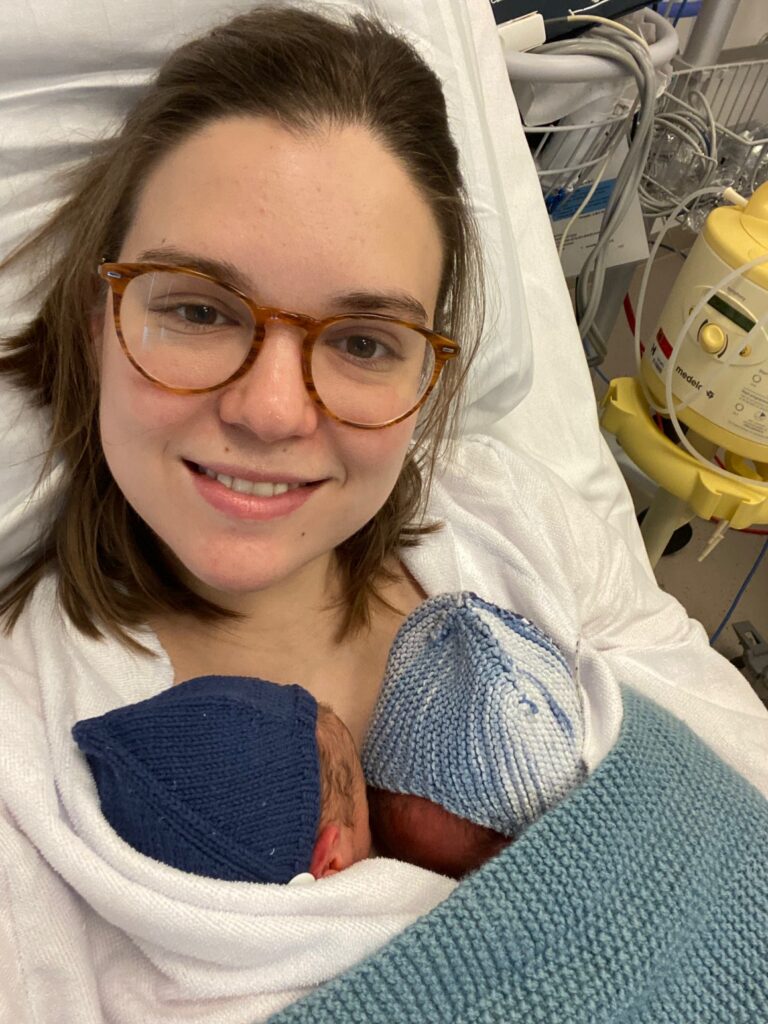
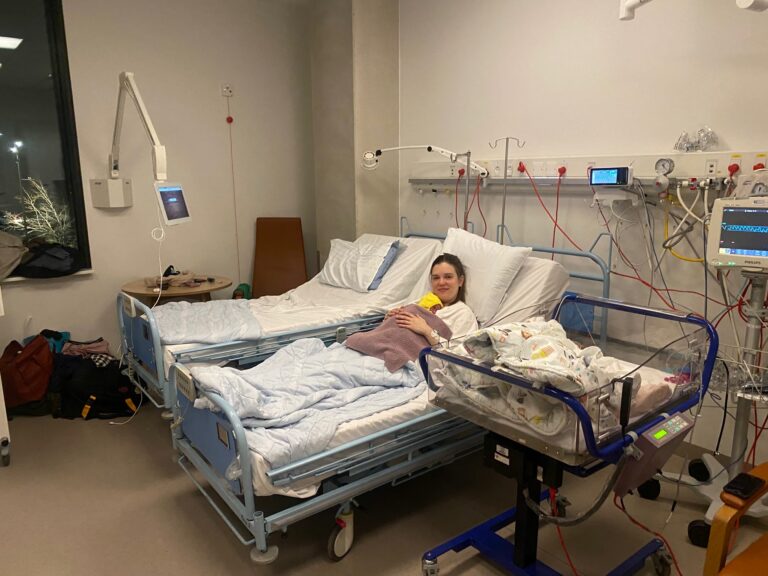
After our twins were born, we spent their first few weeks in the neonatal unit. We started with feeding tubes, and I wasn’t able to try breastfeeding until they were three days old. From when they were born and for many weeks after, I pumped every three hours — around the clock.
The pumping and first latch attempts were incredibly painful. I watched countless videos on deep latch technique, and while those helped, the truth was that it took time — and for my babies to get bigger — before it became bearable. Those early days were a blur of uncertainty, pain, and perserverance.
If you’re in this stage: it gets better. Truly. Every week brought small improvements, and one day I realized I wasn’t wincing anymore.
Getting the Right Breastfeeding Support
I highly recommend reaching out to lacation consultant (if you are in Copenhagen, I can recommend Anne at Ammekonsulenterne, especially if you have (a) premature baby(ies)). Without one, it is likely I would’ve been forced to give up breastfeeding within the first few months. We were stuck in an endless cycle of triple feeding and the lactation consultant visit is what finally helped us get out of it.
My Mastitis Experience(s)
The First Signs
My mastitis experience started early — even in the hospital, I noticed a red spot on my breast. It probably began when we changed the feeding schedule to less frequent feeds. I didn’t have a fever, so I tried managing it myself based on what I found online and what the neonatal nurses told me (heat and massage – read below for why that is actually very bad advice). Unfortunately, it turned into an abscess before I even realized how serious it was.
Developing Absesses
When I finally had an ultrasound, they discovered not one but two abscesses — one external and one internal. The external one was already beginning to rupture and was excruciatingly painful. Both were aspirated (the most painful hour of my life, despite local anesthesia), and a drain was placed in the internal abscess.
What made mastitis so difficult wasn’t just the pain—it was not recognizing what was happening soon enough.
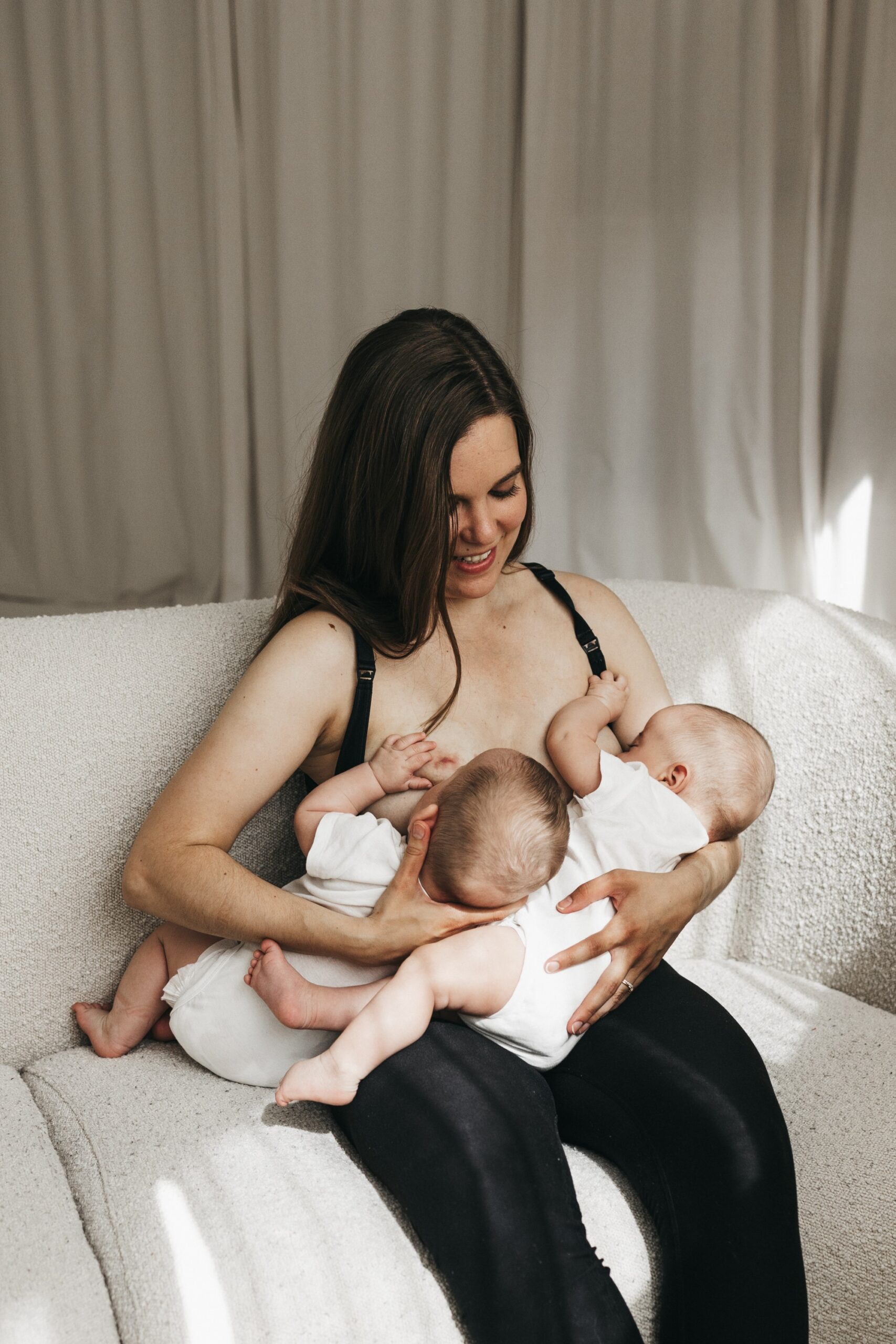
For five days, I had to flush the drain with saline four times a day — my husband did it for me because it was too painful and felt too strange to do myself. Luckily, that was enough and it disappeared on its own. The skin-level abscess was a bit more tricky, due to its placement and size. Although the pain mostly disappeared after the aspiration, I had to wear a special bandage for months while the skin healed, and now I have a large, thick scar as a permanent reminder (which you can see in the photo at the top of this post).
It was by far the most painful and challenging experience of my motherhood journey. I wouldn’t wish it on anyone — which is why I want to share what I’ve learned about mastitis symptoms, prevention and treatment, based on both my experience and the latest research, so others can hopefully avoid the same fate.
What Mastitis Felt Like for Me
The first time I developed mastitis, it didn’t look the way I expected.
It started with a very red area on my breast and a hard lump. I didn’t have a fever or flu-like symptoms at that point, so it was easy to underestimate what was happening. But the area became increasingly painful, and the redness deepened as it progressed. Eventually, it developed into an abscess.
The subsequent times I had mastitis, it followed a different pattern. I would notice redness and a lump first, often with a bit of pain and tenderness, and then later develop more classic symptoms like fever, chills, and a general flu-like feeling. I was extremely tired, and even basic things felt difficult to manage. The one time I was able to manage my symptoms at home without antibiotics, I spent an entire weekend in bed.
Looking back, what made mastitis especially challenging was how differently it can present—and how easy it is to dismiss the early signs if you’ve never experienced it before.
Treating Mastitis: What Helped (and What I’d Do Differently)
Medical Treatment Advice from Cleveland Clinic
What I suggest here is the most updated advice for mastitis treatment, which you can read more about on the Cleveland Clinic website. It is based on the idea that mastitis is inflammation, and therefore should be treated as such. This is why heat and massage can be counterproductive, as they can increase inflammation.
If you ever notice a red spot, lump, or clog:
- Start ibuprofen immediately – every 6 hours, and don’t skip doses. It helps reduce inflammation and can prevent infection from developing.
- Ice after each feeding – this helps reduce swelling and pain.
- Continue ibuprofen until the symptoms are completely gone, and even for a day or two after.
My Treatment Experience
Once, I skipped a dose of ibuprofen and my fever spiked — I ended up needing antibiotics. So my rule now is: stay consistent, and if symptoms don’t improve about 24-48 hours or your fever spikes, go to the doctor right away. Also be aware that you don’t necessarily need to have a fever – I never once had a fever before ending up with the abcesses. If you have a clog that doesn’t go away, especially with redness, see a doctor.
In total, I’ve had mastitis four times — the first time ending in two abscesses, two times treated with antibiotics, and once I managed it at home with ibuprofen and ice. Apart from the abscess incident, I believe most of my episodes were caused by injury — usually one of my twins hitting me in the breast, which likely led to a clog and infection. There’s still very little research on mastitis, but some evidence supports this theory. In my case, the pattern was too consistent to ignore.
In general, I have not found a doctor in Denmark who knew as much about mastitis as I know now, so I suggest you to follow this updated guidance. Even if someone in the medical system tells you something else, listen to your gut and if you feel something is wrong, advocate for yourself.
Final Thoughts
Looking back, what made mastitis especially challenging was how differently it can present—and how easy it is to dismiss the early signs if you’ve never experienced it before.
Breastfeeding twins has tested me more than anything else I’ve ever done — but it’s also given me some of my proudest moments. Every time I see them growing and thriving, I remember those nights in the hospital, the endless pumping sessions, and even the pain — and I feel an enormous sense of gratitude.
If you’re in the thick of it, know that you’re not alone and even though it feels like you’ll never get out of the feeding cycle, one day it does end. As with everything with kids, “it’s just a phase.”