
My “Planned” C-Section & Recovery Experience (In Denmark)
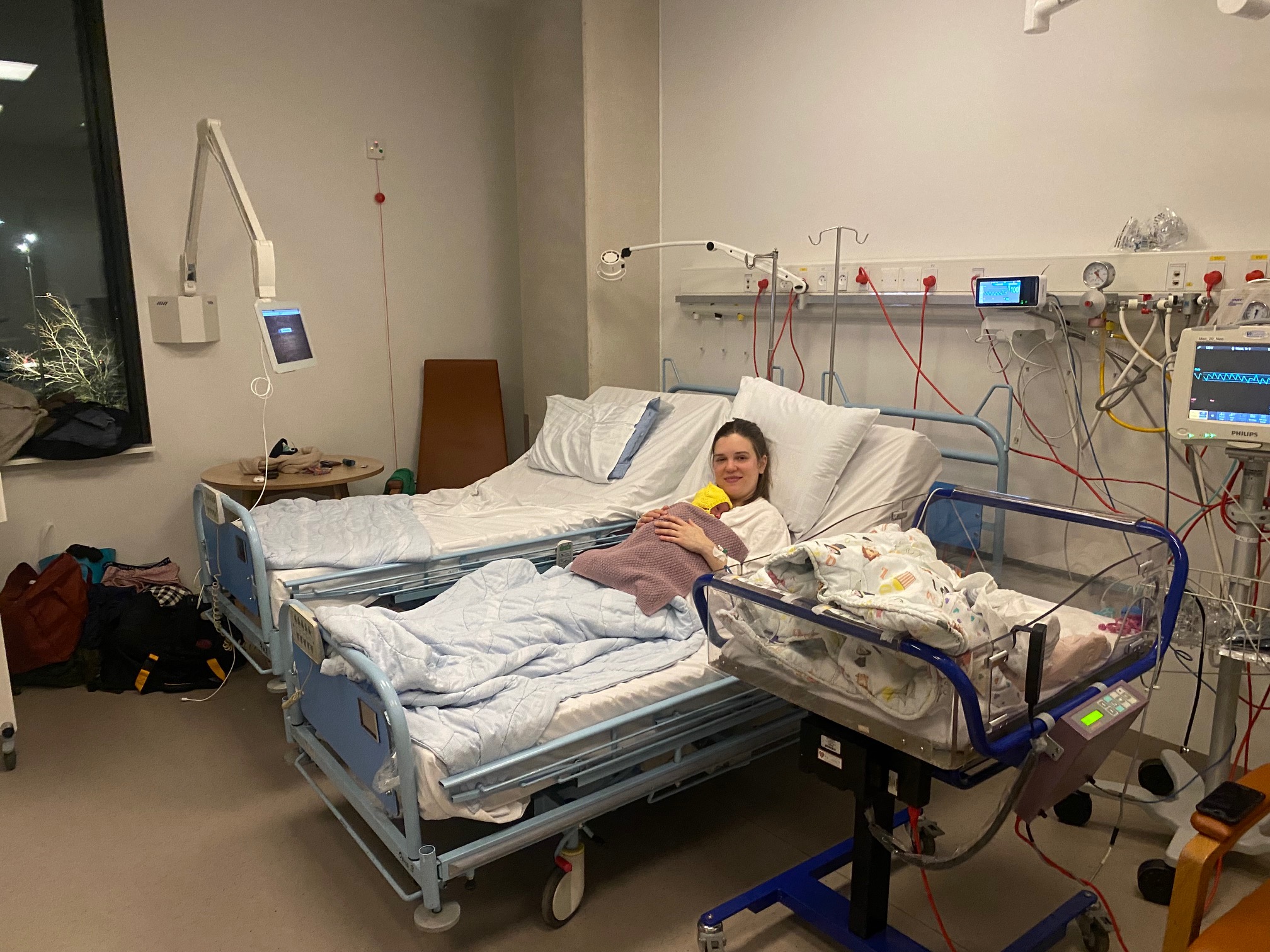
I call this a “planned” c-section because, although it had already been decided that I needed to give birth via c-section due to growth restriction in our Twin A, the timing was not planned. I had fallen and landed on my stomach while out in the city on our final child-free weekend. To be cautious, we ended up in the hospital afterword and long story short, the boys were born the next day. So some of what I experienced will be typical of planned c-sections, and some might be a bit different.
A planned C-section can sound intimidating, but overall my experience in Denmark was very positive and frankly very “informal” compared to what I envisioned. On the other end, there isn’t much support for recovery (I think this is similar in most countries), so I have some lessons learned from my own experience that might help others.
So in this post I want to share two things:
- What a planned C-section in Denmark looks like
- What recovery actually looked like for me and what you can do to accelerate your own recovery
If you’re preparing for one yourself, hopefully this gives you a better idea of what to expect.
Planned C-Sections in Denmark
How They Are Scheduled
The decision is typically made after discussions with your doctor and midwife about medical factors and risks. In our case, it was decided with the OB-GYN due to growth restruction in one of our twins. At Herlev Hospital, where I gave birth, C-sections are scheduled for Tuesdays, Wednesdays or Fridays, so at that appointment with the OB-GYN we agreed on one of the available dates closest to my latest possible birth-date (week 36+6 due to my MCDA pregnancy).
Usually, when this decision is made, they will give you some informational material about the surgery, how to prepare and what to expect. I was instructed to show up for a blood test the day before the c-section, and also to pay a visit to anesthestia. Usually, you will be called the day before to know what time to show up for the c-section. However, you may still have to wait, depending on how many other planned and emergency c-sections are in the queue that day.
The Day of the Surgery
Surgery Prep
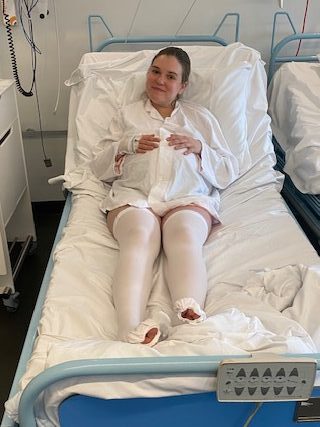
This for us was quite different than a truly planned c-section because we had been admitted to the hospital the night before. We therefore spent the morning meeting with the anesthesiologist and the pediatrician from the neonatal unit. They came to my room to take the required blood test and I was prepped there as well. Here you can see my c-section fashion, hospital gown, compression socks and all:
The Main Event
The part that surprised me the most, and I guess is most different from how things would go in the US, is that I walked myself down to the operating room and sat myself down on the operating table. Since we ended up in the hospital unexpectedly, I didn’t have any slippers with me so I got to wear my bright pink sneakers into surgery. After sitting down, the anesthesiologist injected the anesthesia in my spine, after first giving a local anesthesia. I really hate needles, so I was quite afraid of that part, but it wasn’t painful at all and I didn’t see anything.
Then I laid down and they set everything up for surgery. They usually prick you somewhere near where they will make the incision for surgery before starting, to ensure the anesthesia has worked. From the time they started until both babies were out was relatively fast. The slow part is getting sewn up! During that part I was alone, as my husband had left for the neonatal unit already with the babies.
What really surprised me the most about the whole process was how, although you don’t feel pain, you can feel every other sensation. I think someone had told me that but it truly did not prepare me for feeling my muscles, skin and insides pulled and pushed throughout the surgery. The weirdest part was when they were pulling out the placenta – it sounded like rain boots squelching in mud. Not very pleasant.
Post-Op Recovery
After the surgery, they transferred me to a hospital bed and then rolled me into the post-op recovery room. If you have a typical c-section, you will be there with your partner and your baby. In my case, I was alone because they had already moved to the neonatal unit. Luckily, in the twin birth preparation class that Herlev offered, they told us that this would happen, so I was prepared. If you expect you will be in this situation, you can have someone else come to the hospital to be with you. I ended up being alone due to the somewhat unplanned nature of the surgery, but for me it was actually totally fine. I had known what to expect and I was relieved that both babies had come out crying and did not need extended breathing support.
I had my phone there and my husband was sending me pictures while I texted family and close friends about the birth. They gave me water, saftvand (a very yummy juice) and a morphine pill, and as soon as I could bend each of my legs up toward my chest, I was given the green light to go see my babies.
The First 48 Hours: The Hospital Stay
For your first ~48 hours (2 nights) after surgery, you are a patient in the maternity ward. I was able to stay down in the neonatal unit, but for those first 2 days, I would either be rolled upstairs or someone would come down to see me when I needed to have treatment.
The first evening, just a few hours after surgery, I was taken upstairs to the maternity ward to have my catheter removed. They changed my mesh underwear/pad, had me use the toilet, and gave me more painkillers as well as a laxative. I was allowed to have more morphine if I wanted it, but I had to ask for that. After this point, I had to get up every ~3 hours to use the toilet. There was always something to do every 3 hours: pump, pee and painkillers.
The first night I barely slept because I was in so much pain. I had my husband go upstairs around 3am to get me morphine, but it didn’t do much for me. The next day, around 24 hours after surgery, a nurse came down to remove my bandage, take a look at my incision and give me some instructions for how to handle the steri-strips that remained. I was then told it was time to take my first shower. That was certainly a comical sight (looking back).
First of all, just getting in and out of the bed was a struggle. Having the hospital bed that you can raise and lower was a big help, but swinging my legs over and standing up took some mental preparation. Being in the neonatal, apparently they didn’t think it was necessary to have seats in the shower, so I had to sit on the toilet while my husband quite literally hosed me down.
After that first day, it got progressively easier and I walked more and more every day (walking really helps recovery!). I was quite thankful for our longer stay in the neonatal (even though I was released from the maternity ward on the second day), because it meant we still had a ton of help, didn’t have to cook or clean, and most importantly, I didn’t have to somehow make it out of the hopsital and home only 2 days after having major abdominal surgery. I have heard varied stories of how miserable that trip home was from other moms, so I am glad I could avoid that.
Pro Tip: if you know you will be staying in the hospital past the 48 hour mark, I suggest bringing your own ibuprofen and paracetamol. You alternate taking these every 3 hours and after you are released from the maternity ward, they no longer provide them. I took painkillers until around day 10 after surgery.
C-Section Recovery & Exercises Timeline
In the longer term, below I have outlined what I did at the different stages of my c-section recovery, based on what I was recommended by my doctors and my pelvic floor physical therapist. If you haven’t been to a pelvic floor PT and you are or have been pregnant, I highly recommend it. If you’ve had a c-section, I would say it’s a “must.” Check out my Resources page for my recommendations on this topic.
First 8 Weeks
The first couple of months were all about healing.
My main focus was:
- walking
- resting
- drinking lots of fluids
- eating well
There was no intense exercise — just allowing my body to recover from surgery and pregnancy.
Around 8 Weeks: Scar Massage
Around the two-month mark, my physical therapist recommended starting scar massage.
Her advice was simple: do it every time you shower, so you don’t forget.
Some of the techniques I used included:
Small circles along the scar
Applying gentle pressure in small circles and slowly moving across the scar.
Sliding across the scar
Placing one hand on one side of the scar and sliding the other across it, gradually moving along the scar each time.
Working on “sticky” points
Some spots felt tight or uncomfortable. The goal was to gently work on those areas without causing significant pain by putting pressure in a circular motion.
At this stage you can also start using:
- silicone scar gel
- silicone scar patches
These can help improve the appearance of the scar as it heals.
Around 6 Months: Deeper Scar Work
Later in recovery, my physical therapist introduced cupping to help improve scar mobility.
This involved:
- sliding the cup across the scar
- moving it in a zig-zag pattern
- focusing on tight or “sticky” areas
It may sound a little strange if you haven’t heard of it before, but it can really help release tension around the scar.
Final Thoughts
C-section recovery is definitely a process. It’s not something that happens in a few weeks, and I think that part often gets underestimated.
But with time, patience, and the right support — especially from a pelvic floor phyiscal therapist — things improve a lot. I think it took me at least 9 months post-birth to start to feel “normal” in my body again after the pregnancy, surgery and breastfeeding. You can do a lot to improve your healing but nothing can replace time.
If you’re about to have a planned C-section in Denmark, hopefully this gives you a clearer idea of what to expect. And if you’re already in the recovery phase, know that healing takes time and every body moves at its own pace.